

The Call You Don’t See Coming: Tim Brown’s POAM 2026 Message on Answering the Job, and Carrying It Home
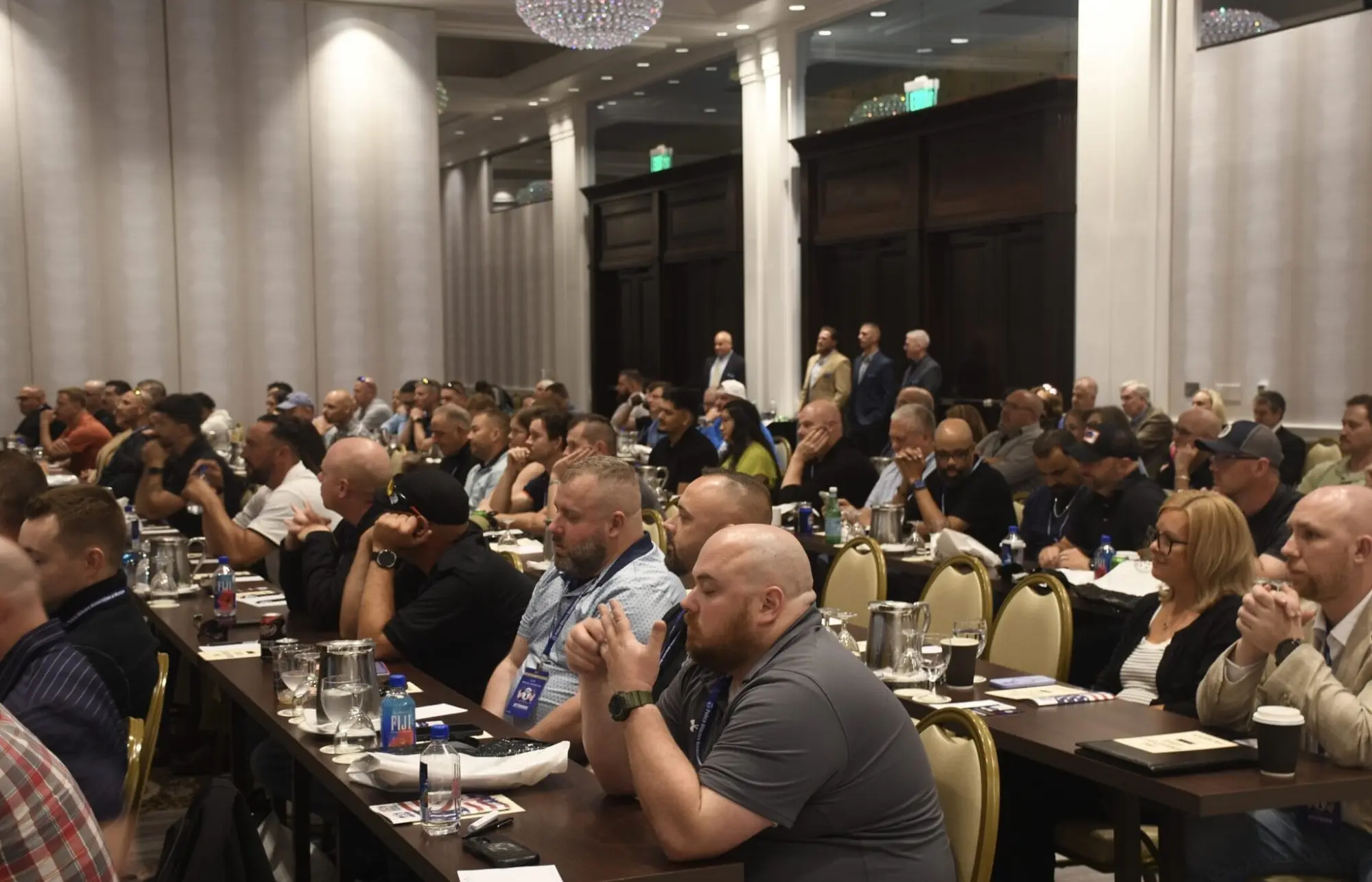
On May 20, 2026, the POAM Annual Convention in Grand Rapids fell quiet as Tim Brown stepped to the microphone. A retired FDNY firefighter who was on the ground inside the World Trade Center complex on September 11, 2001, Brown survived the collapse of the South Tower while inside the adjoining Marriott Hotel and walked out into a quarter century of work he never volunteered for: the work of carrying that day home. He came to Michigan to talk to law enforcement about both halves of the job. The first half is the call itself: the one you don’t see coming, the one that asks more than the oath ever warned you about. The second half is what every officer in that room will recognize, and very few of them get a real roadmap for what happens after. This is the long, honest version.
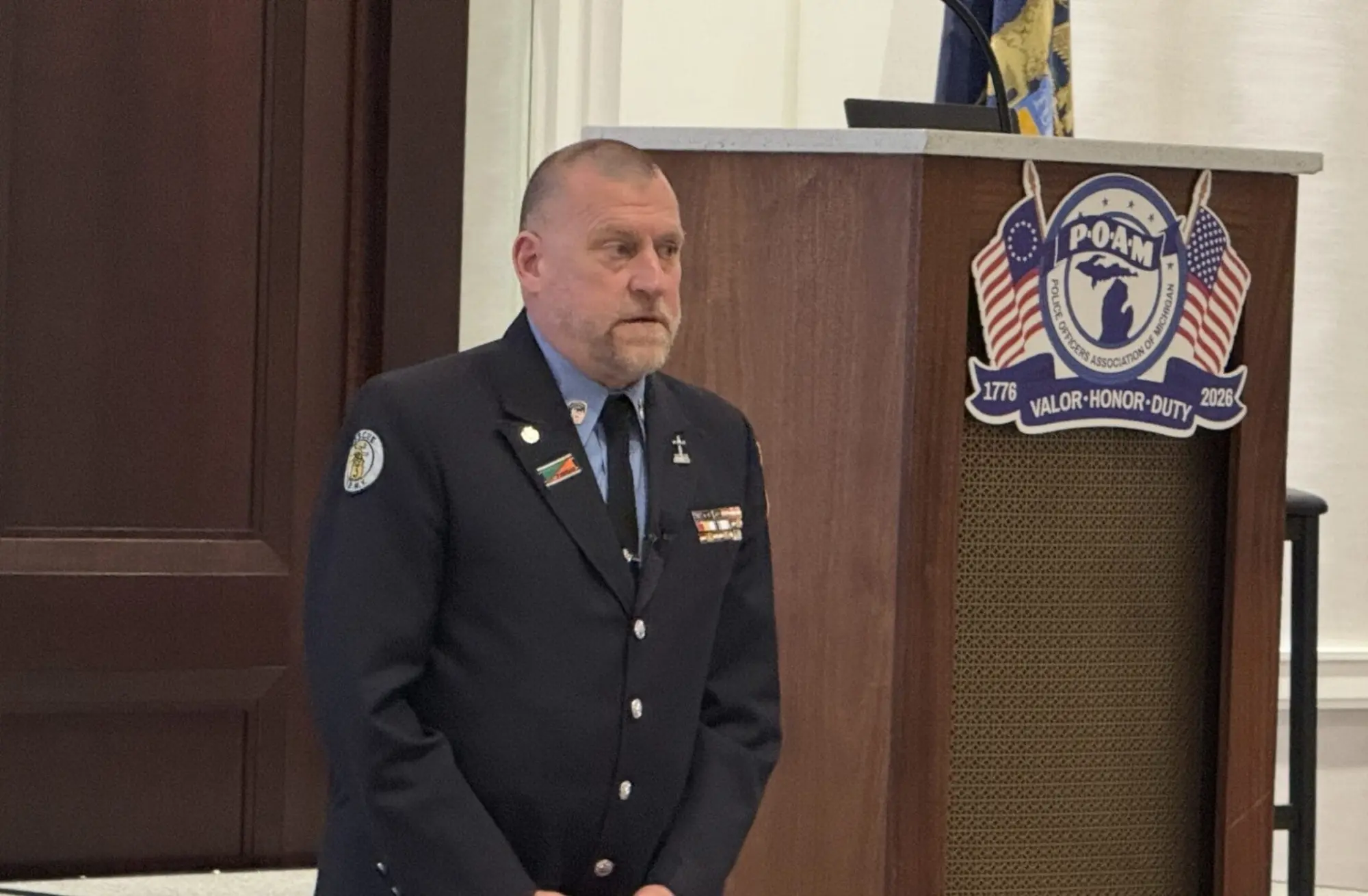
Who Is Tim Brown?
Tim Brown spent more than twenty years with the New York City Fire Department. On September 11, 2001, he was detailed to the New York City Mayor’s Office of Emergency Management (OEM) as Supervisor of Field Operations. OEM’s headquarters and Emergency Operations Center were on the 23rd floor of 7 World Trade Center, where he started that morning before the first plane hit.
When the North Tower was struck, Brown went to the lobby command post. He was then assigned to open the command post in the South Tower lobby with Assistant Chief Donald Burns. He was steps from re-entering the South Tower when it came down, and survived by holding onto a structural column inside the Marriott as a 160-mph wind of debris tried to pull him out into the street. He kept working that day, the next day, and the months and years that followed. He lost roughly one hundred friends and brothers on the morning of September 11. He is the author of The Greatest Love, scheduled for release on August 25.
The Call You Don’t See Coming
An Ordinary Morning
Brown started September 11 the way he started most mornings: cereal, orange juice, hot tea, the newspapers, and the third-floor cafeteria at 7 World Trade Center. The unusual part was a five-second power outage. Then a young woman running past him said the words a plane hit the tower, and the rest of the day was on.
This is the part Brown wanted Michigan’s officers to sit with. The call you don’t see coming doesn’t announce itself. It interrupts a slow morning, a routine shift, a coffee break, a paperwork hour. By the time you know what it is, you’re already in it. The only thing that determines whether you handle it is who you were before the phone rang, what you trained for, what you practiced, and what you built with the partner sitting next to you.
When Training Becomes Instinct
Brown’s clearest illustration came from the South Tower lobby. He was standing in front of an elevator car full of people who had survived a 70-story free fall but were now being slowly burned alive, jet fuel on fire in the pit beneath them, no tools, no way through. He turned to scream for fire extinguishers and hit someone who had come up behind him: Firefighter Mike Lynch from Ladder 4, a man Brown had personally helped train.
“With all the confidence and professionalism, he put his hand on my shoulder, he squeezed my shoulder, and he said to me, ‘I got it. I got it.’ Three words. ‘I got it.'”
Lynch had the knowledge, the tools, the gear, and the willingness. He went to work. He’s credited with saving three women from that elevator before the building came crashing down on him. Brown told the POAM audience that Lynch’s three words were the cleanest example of training he has ever seen, not bravado, not adrenaline, just the calm certainty of someone whose preparation had become reflex. That is what the job demands. That is what training is for. It isn’t there for the easy day. It’s there for the day you didn’t expect to have.
The same thread ran through every story Brown told about the friends he lost. Captain Terry Hatton of Rescue 1 (his best friend) hugged him in the North Tower lobby, kissed him on the cheek, said, “I love you, brother. I may never see you again,” and went up the stairs to the 83rd floor. Firefighter Chris Blackwell of Rescue 3, Brown’s old partner, told him, “Timmy, this is really bad,“ and went up anyway. They knew what they were walking into. Their training and their commitment to the people next to them made the decision before the moment did.
The Weight You Carry Home
What the Job Costs
If the first half of the talk was about answering the call, the second half was about what answering it costs you over the next twenty-five years, and this is the part Brown said he had not shared with this audience before.
When Brown retired in 2004 and returned to New York, he entered what he calls the darkest period of his life. Roughly one hundred families to stay faithful to. Funerals and memorials did not stop. The quality of friendship he had taken for granted, the men he had worked beside in Rescue and Special Operations, was simply gone. He lost weight. He stopped talking. He looks back at photographs of himself from that period and says the grief is visible in his face.
He didn’t pretend any of this away on stage. He told the POAM audience that public safety professionals across this country are carrying weight nobody outside the work understands, and that the cost shows up later, sometimes years later, in ways the officer himself or herself often doesn’t recognize until it’s already on top of them. He named PTSD without flinching. He named grief without flinching. He named the version of himself he calls “Angry Tim.” The years when a wrong word from a stranger almost ended in a fight, when a well-meaning checkpoint at the 10-year memorial nearly ended in jail. None of that is failure. All of it is the bill.
The Long Quiet After
The quiet that comes after a major incident, or after a career of smaller incidents stacked on top of each other, is where most public safety professionals do their hardest work, and most of it happens alone. Brown’s message was that it doesn’t have to. He went through ten therapists before he found the one who worked. He didn’t lean on medication; that was his choice, and he was clear that it isn’t everyone’s. What he kept going back to, in every story, was that the answer eventually showed up. Just not on the timeline he expected. And almost never in the form he had been picturing.
Patience and Grief — The Long Way Through
The Five-Year, Ten-Year Truth
The phrase that anchored the back half of Brown’s talk is one Michigan officers should write down:
“Patience and grief do not mean two weeks or six months; patience and grief mean five years, ten years.”
This is the line that separates a healthy aftermath from a bad one. The job and the well-meaning people around it will tell you to be okay in a timeframe that has no relationship to what actually happened. Brown’s message is the opposite. Give it the time it needs. Do the work in the meantime. Don’t measure your recovery against a calendar that doesn’t apply to you.
When the Answer Doesn’t Look Like You Expected
Brown had been praying for what he called “quality men,” friends of the caliber he had lost. The first answer arrived in the form of a bartender and her circle of joyful friends, who took him into their apartment, put a cold beer in his hand, and reminded him what laughter sounded like. Years later, the second answer arrived in the form of a retired Navy SEAL, wounded eight times by a machine gun in Iraq, who became one of his closest brothers. That friendship took roughly ten years to arrive.
Brown’s takeaway, said almost as an aside but worth the entire keynote: The answer to what you’re asking for comes. It just doesn’t come the way you think, and it doesn’t arrive on the schedule you wanted. For officers carrying real weight, that single idea is the difference between giving up on the process and staying in it long enough for the process to work.
Tim 2.0
Brown describes the version of himself standing on the POAM stage in 2026 as “Tim 2.0.” He still misses his friends from before. He carries the names daily, by design, as part of a private agreement he made the morning the wind tried to pull him off that column inside the Marriott. But the life on the other side of patience and grief is, in his own words, incredibly happy. New friends. New work. A book about to come out. The capacity to stand in front of a room full of police officers in Grand Rapids and tell the truth about what the last twenty-five years actually required. That is the version of the future he came to Michigan to point at.
Lessons That Resonate Across Law Enforcement
The first is for the call itself. Train like Mike Lynch; well enough that when the worst moment of your career arrives, the only words you need are I got it. Build the trust with your partner now, in the slow hours, so that it’s already there when the call lands. The job will not warn you which day decides everything. The only honest preparation is treating every day as if it might be.
The second is for the years after. Expect to carry weight you weren’t briefed on. Take it seriously when it shows up. Don’t measure your recovery against someone else’s schedule. Find the therapist who actually works for you, even if it’s the tenth one you try. Stay in the room with your people; the laughter, the brotherhood, the unlikely friendships that don’t look like what you were asking for. Give it the years it needs. There is a Tim 2.0 on the other side. Brown is the proof.
Book reference: The Greatest Love by Tim Brown. Release date as stated by the speaker, August 25, 2026.