

Don’t React – Respond: SEAL Team Six’s Rob O’Neill on Stress, Fear, and the Cost of the Call at POAM 2026 Annual Convention
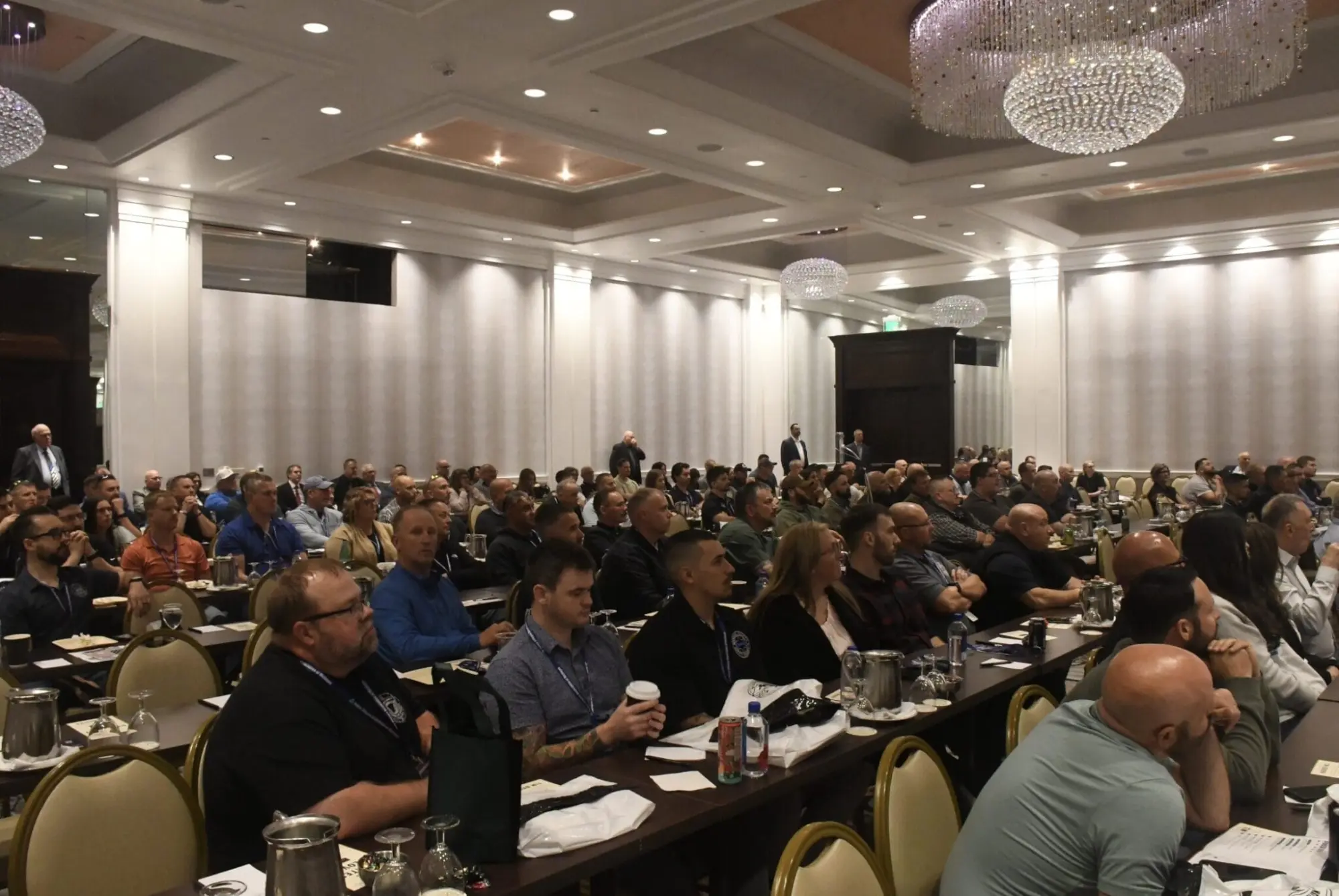
On May 20, 2026, the POAM Annual Convention in Grand Rapids welcomed a speaker most of the room had been reading about for fifteen years. Rob O’Neill, a retired Senior Chief Petty Officer, U.S. Navy SEAL, and one of the operators inside Osama bin Laden’s bedroom on the Abbottabad raid in May 2011, spent his keynote not on the war story but on the operating system underneath it. The stress and how to put it down. The fear and how to use it. The panic and why a leader has to refuse it. The cost of the call to the people who answer it, and to the families who watch them leave. Every officer in the room had a version of those things in their own career. O’Neill spent an hour showing how the highest-performance team in modern combat thinks about them, and why the same principles apply to a patrol shift in Michigan.
Who Is Rob O’Neill?
Rob O’Neill spent more than sixteen years inside the Naval Special Warfare Development Group, the unit publicly known as SEAL Team Six. He enlisted in the Navy out of Butte, Montana, in 1995, went through Basic Underwater Demolition/SEAL (BUD/S) training as Class 208, and later screened into the tier-one counterterror unit through one of the most selective courses in the U.S. military, where roughly half of an already-vetted population of Navy SEALs do not make the cut.
Over his career, he served on more than four hundred combat missions and was on the assault force that rescued Captain Richard Phillips from Somali pirates in April 2009, and on the team that conducted the May 2011 raid that killed Osama bin Laden. He retired in 2012, has authored multiple books, and now speaks regularly to military, law enforcement, and corporate audiences about leadership, decision-making, and team performance under pressure.
What he brought to POAM 2026 wasn’t the operational chronology. It was the way of working underneath it.
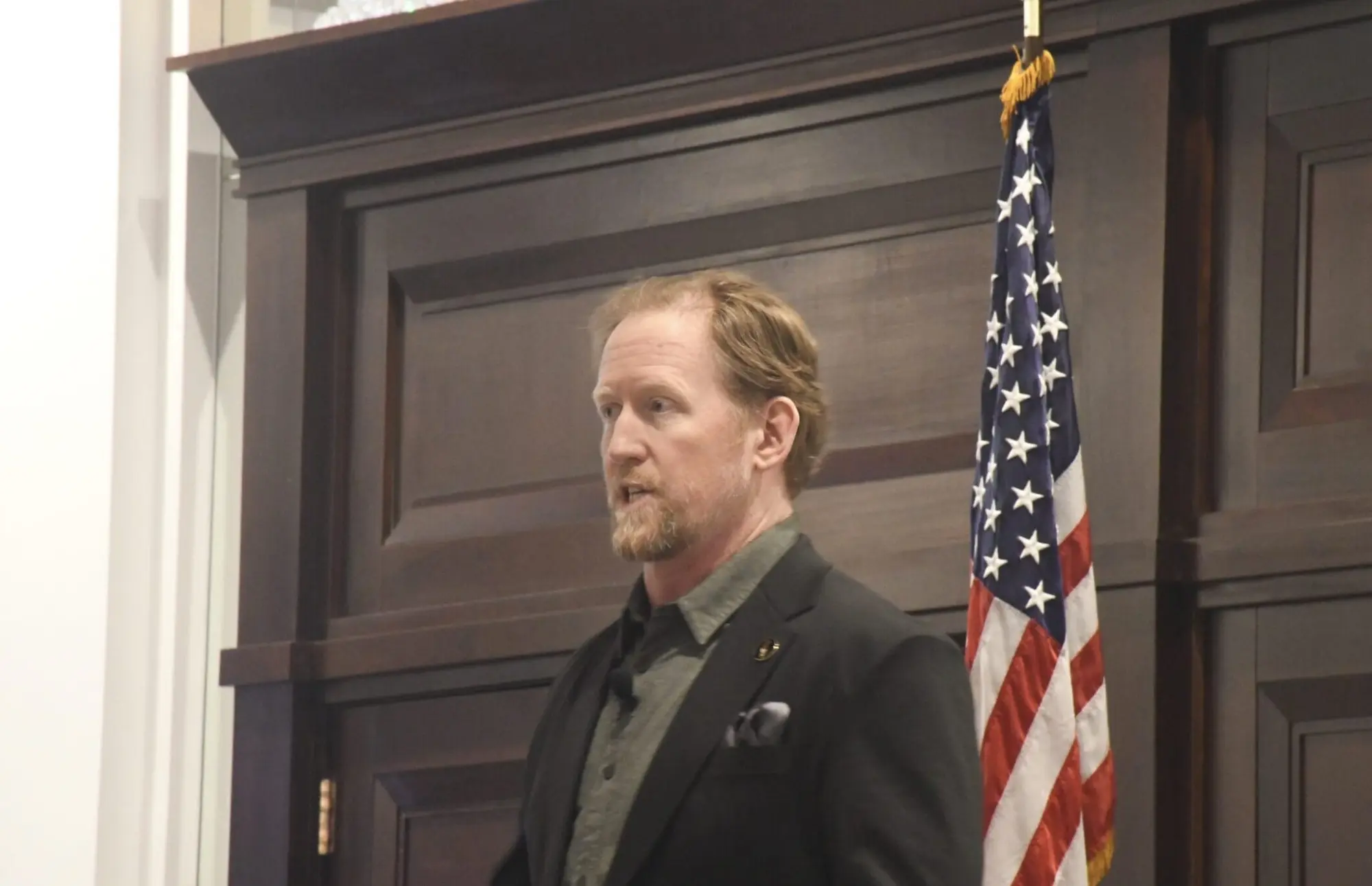
When the Call Comes
An Ordinary Day
The call that defines a career almost never announces itself. O’Neill made the point with a story Michigan officers will recognize at a personal level. On Good Friday in 2009, he was sitting on a tiny chair at his daughter’s preschool Easter tea party when the message came in: Captain Richard Phillips has been taken by Somali pirates. Your team is going to get him. He kissed his daughter on the forehead and went to war from a preschool classroom. Within fifteen hours and forty-six minutes of that message, he and his team were on station.
That, he told the POAM audience, is how the call usually arrives. Not with sirens. With a phone vibrating on a slow morning, in the middle of someone else’s normal day. What determines whether the next four hours go well is everything you did in the months and years before the phone rang.
Don’t React: Respond
The core operating principle O’Neill returned to throughout the keynote was the difference between reaction and response. His standing instruction to his men in combat was: don’t react, do respond. A reaction is the first impulse, usually emotional and often wrong. Response is what you do after the half-second of clarity that separates a professional from an amateur. He framed it for the civilian world as the rule about angry emails: write it, print it, sit on it for twenty-four hours, and if it still feels right tomorrow, send it. Almost none of them ever feel right the next day.
For a law enforcement audience, the translation is immediate. The traffic stop that goes sideways, the radio call that lands wrong, the supervisor who pushes the wrong button on a bad day; every one of those moments is decided by whether the officer reacts or responds. O’Neill’s point was that the gap between the two is built deliberately, in advance, by people who have rehearsed the difference until it’s a reflex.
Stress Is a Choice
The single most quotable line of O’Neill’s POAM keynote was the one most directly aimed at how officers carry the weight of the work:
Stress is a bag of bricks that sits by your bed. You can pick it up if you want to and let it ruin your day. Or you can back off, take a deep breath, put stress down, and forget about it.
He was making a literal point. Stress is self-induced, whether you are taking effective fire on a mountaintop in Afghanistan, landing a jet on an aircraft carrier in heavy seas, or making a latte at 7 a.m. on a Monday with the line out the door. The amount of stress you feel is the amount you’ve decided to feel. No one, he said, has ever accomplished anything positive by panicking. Putting the bag down is a discipline, not a feeling. It can be trained.
The Weight You Carry Into the Work
Kissing Goodnight vs. Kissing Goodbye
If the first half of the talk was the operating principles, the second half was the human cost, and O’Neill delivered the line that landed hardest for the families in the audience:
There’s a huge difference between kissing your kid good night and kissing your kid goodbye.
He specifically mentioned the Abbottabad raid. He had been on enough missions by then to know which goodbye was which one, and the bin Laden raid was the second kind of mission the team genuinely believed would be one-way.
Every officer in the POAM room has a version of that goodbye. Not as extreme on most days. But the structure is identical, the look back from the door, the kiss that you mean more than the other person knows, the deliberate not-mentioning-it on the way out. That weight is part of the job. O’Neill’s contribution wasn’t to wave it away. It was to name it out loud, in front of a roomful of cops, so they would stop carrying it alone.
Fear, Panic, and the Difference Between Them
O’Neill was clear that fear is not the enemy. Fear is the equipment. “It’s okay to be afraid,” he said. “Fear is natural, and fear is healthy. Fight or flight is healthy. Fear makes you think clearly. If you didn’t have fear, you wouldn’t have courage.” He admitted, in front of a room full of people who would never expect a SEAL to say it, that he was probably afraid every single time he went out the door on a mission. If anyone tells you they were never afraid in a shootout, he said, they’re either lying or they’re a sociopath.
What you cannot do is panic. Panic is contagious, panic gets people killed, and panic is the failure of a leader to do their actual job. The good news is that panic’s opposite is also contagious. “You know what else is contagious as a leader? Calm. Nobody knows what you’re feeling. Calm down. And if you portray that to people around you, they’ll calm down. Guess what that does to you? Calms you down. It’s reciprocal.” For supervisors in the POAM crowd, that’s not a motivational poster. That’s a job description.
How Good Teams Stay Good
Preparation Beats the Perfect Plan
O’Neill spent significant time on the distinction between over-planning and preparation, which maps directly to how any law enforcement operation is briefed and executed. He used the bin Laden raid itself as the case study. The team had three weeks to plan, the best tactical minds in the world in the room, a scale model of the compound to rehearse against, and a flawless final plan they had walked through dozens of times.
The most important mission in modern military history was saved not by the perfect plan, but by the preparation that ran underneath it. “The only time a perfect plan exists is when you’re planning in the planning room,” O’Neill said.
Training, Communication, Repetition
The three words O’Neill came back to most often were training, communication, and repetition. Train your people thoroughly enough that they know not just what to do but why, because people who understand the why move faster, communicate better, and make better calls when the rehearsed plan stops applying. Get rid of the noise on the radio and in the building; the less talk, the better the work. “Just because you’re talking does not mean you’re communicating,” he said.
The law enforcement parallel is direct. The platoon that trains together, communicates without ego, and reps the fundamentals until they’re automatic is the platoon that handles a high-stress call cleanly. The one that doesn’t is the one that gets a use-of-force review.
Complacency Is the Real Enemy
The last operating principle O’Neill underlined was the easiest one to violate, especially for veteran officers. “Complacency kills,” he said, “and complacency is caused by success.” The shortcut you take on the slow night because you’ve taken it a hundred times before is the one that ends a career. Don’t die because you got bored. Follow your own rules, and make sure the rules make sense in the first place. If a better way exists, propose it through the chain. But until the rule changes, the rule is the rule, because it’s there for a reason you may not see today.
What POAM Members Should Take Home
On the call itself, the gap between reaction and response is built in advance. Train it. Rep it. Calm down on purpose. The officer who can put the bag of bricks down before a high-stress call is the officer who walks back to their car at the end of the shift. The supervisor who can project calm into a chaotic scene is the one who lowers the temperature for everyone wearing the same uniform.
On the cost: the difference between goodnight and goodbye is real, and the families in your house carry it with you. Don’t pretend otherwise. Don’t carry it alone, and don’t let the people around you carry it alone either.
On the team: preparation beats the perfect plan; training and repetition beat improvisation; and complacency is the enemy that takes more officers than any external threat. Follow your rules. Don’t take the shortcut. Remember that the people on either side of you in the briefing room are the only reason any of it works.
Lessons That Resonate Across Law Enforcement
POAM 2026 attendees walked out of this Seminar session with a keynote from one of the most experienced combat operators in modern American history, and the operating principles he shared fit a Michigan patrol shift as well as a SEAL Team Six platoon. The work is different. The mindset is the same.
Thank you, Rob, for bringing it to Michigan.